

Rhode Island’s affordability crisis took center stage when two of the leading candidates for governor met at a policy forum moderated by Ocean State Media political reporter Ian Donnis on Wednesday night.
Democrat Helena Foulkes called housing a top priority and stumped for her plan to use the recently passed “millionaire’s tax” to support building new units.
“The number one thing that people talk to me about is the cost of housing,” Foulkes said. “That is the thing that keeps them up at night. It keeps me up at night.”
Independent candidate Ken Block highlighted government taxes and surcharges he would seek to remove in order to reduce energy bills and save businesses money.
“The state shouldn't make things harder for people, and it's doing that just about everywhere you look right now,” Block said. “We can be better than that, and I'd like to lead that effort to give people a break.”
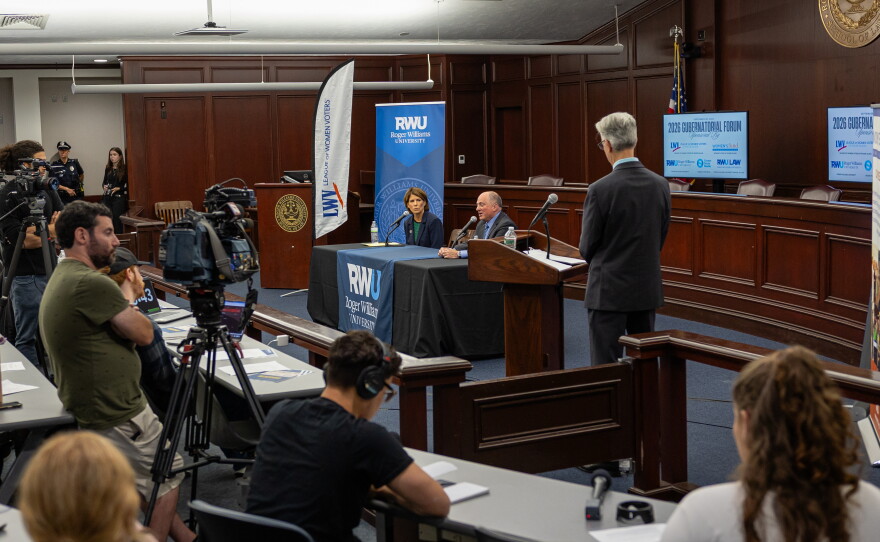
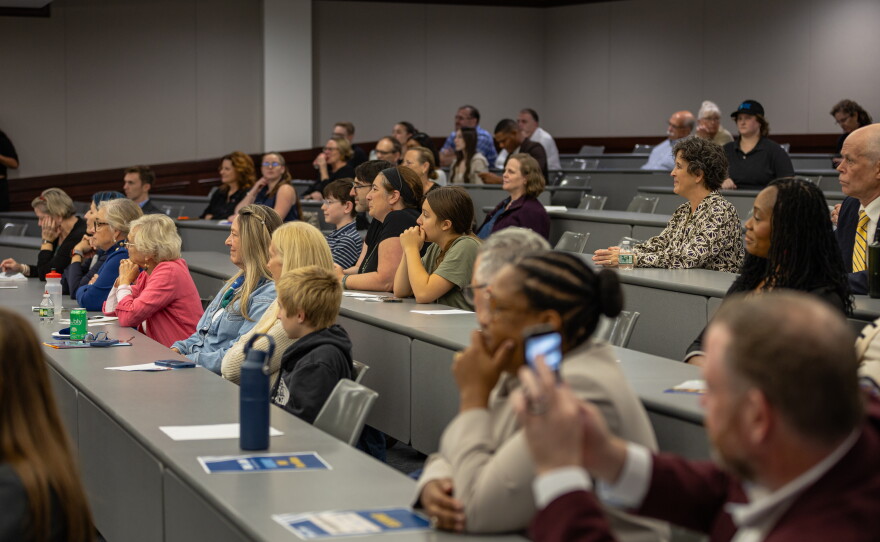


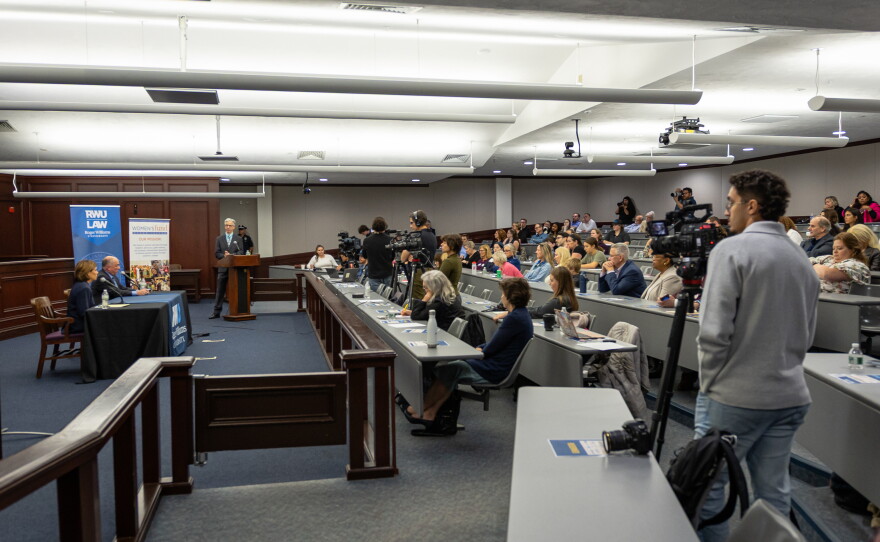
The forum at the Roger Williams University School of Law in Bristol aired live on 103.7 FM and was organized by the Women’s Fund of Rhode Island and the League of Women Voters Rhode Island. Ocean State Media served as media partner.
Republican candidate for governor Aaron Guckian was slated to appear at the candidate forum, but he pulled out Wednesday morning — one day after Block released a poll meant to pressure Guckian to drop out of the race.
In a statement, Guckian spokesman Mike Fahey said the following had been communicated to an event organizer: “Aaron's schedule changed unexpectedly… Any speculation by the liberal media that he's exiting the race is just fake news. Aaron is not going anywhere."In addition to Block, two lesser-known independent candidates are also running for governor, Jasjit “Jay” Gotra and Christopher “CD” Reynolds.
Areas of agreement
Both candidates at the forum expressed a desire to revamp the state Department of Transportation. Unsurprisingly, they pointed to the failure of the westbound Washington Bridge as emblematic of a state agency that spends too much while delivering too little.
Block, a software engineer who is making his third bid for the governor’s office, told the crowd: “RIDOT failed. There's just no other way to say it.”
Foulkes, a 62-year-old former CVS executive, unseated incumbent Gov. Dan McKee in September’s Democratic primary. Her victory was likely fueled, at least in part, by voter dissatisfaction over McKee’s response to the Washington Bridge crisis. Foulkes said, if elected, she would hire a new transportation director from outside the agency.
“This is a place where I think Rhode Islanders feel desperately cynical,” Foulkes said. “You know, to spend a billion dollars on bridges and roads – which is up double in five years – and have some of the worst bridges and roads in the country is terrible.”
Areas of contrast
While the forum was largely civil, Foulkes sought to contrast her support for expanded access to reproductive healthcare with what she implied was lukewarm support from Block.
When asked about how he would respond to calls from advocates to “protect and affirm” reproductive healthcare in Rhode Island, Block said: “I'm going to let the General Assembly do what the General Assembly does, and I will sign the bills that they bring forward to solve – to tackle – these problems.”
Foulkes said she was a vocal supporter of expanding abortion access.
“In this national environment, we need someone who really, really cares about women's reproductive health,” Foulkes said.
Block hit Foulkes on her plan to use funds from the so-called millionaire’s tax to support building housing. Though the General Assembly passed the surcharge on income over $1 million, he said, lawmakers have already started to allocate where those funds should go.
“It's not really a good funding source for a housing solution, because the pool of money isn't there right now,” said Block.
Both candidates emphasize change in closing statements
“I've always brought people together to solve big problems,” Foulkes said, “and I look forward to doing that with all of you and the people of Rhode Island.”
Block, the independent in a state with a slate of all-Democratic statewide officials, said Rhode Island is “at a crossroads.”
“If you want a different result in this state, you have to vote differently,” Block said, “and you don't see many candidates more different than I am.”


