
Gubernatorial forum: Updates from the stage at Roger Williams University

Rhode Islanders made their primary picks. What else should voters know about the candidates for governor ahead of the general election on Tuesday, Nov. 3?
In partnership with the Women's Fund of Rhode Island and the League of Women Voters Rhode Island, Ocean State Media provided live coverage of a gubernatorial forum hosted at the Roger Williams University School of Law.
In a 60-minute debate moderated by longtime political reporter Ian Donnis, Democratic candidate Helena Foulkes and independent candidate Ken Block answered our top questions before a live crowd. The forum also aired live at 103.7 FM across Rhode Island. This live blog and subsequent coverage also details key takeaways.
Editor’s note: Republican candidate for governor Aaron Guckian was slated to appear at this candidate forum, but he pulled out Wednesday morning.
In a statement, Guckian spokesman Mike Fahey said the following had been communicated to an event organizer: “Aaron's schedule changed unexpectedly… Any speculation by the liberal media that he's exiting the race is just fake news. Aaron is not going anywhere. This was solely an unforeseen scheduling conflict."
Guckian’s change of plans comes one day after Block, the leading independent candidate in the race, released a poll meant to pressure Guckian to drop out of the race.
Closing Statement from Helena Foulkes
Helena Foulkes: I know that Rhode Islanders are ready for change. I felt it very deeply in the primary that I just ran… Rhode Islanders love to complain, and I have a long list of things that people want to fix… (But they’ll say), “God, I love living here” … I want to be a governor for all. I want to be someone who will come in and really make the state government work for people. Make it so that we can have a house, a good paying job, a healthcare system that works.
Editor’s note: Responses edited for length and clarity.

Closing Statement from Ken Block
Ken Block: I think Rhode Island is at a crossroads. I think that the state broke politics in Rhode Island… People are looking for answers, people don’t want the political status quo. They want somebody to get in there and do things… Tackling the educational problem, cleaning out the Department Of Transportation… If you want a different result in this state, you need to vote differently.
Editor’s note: Responses edited for length and clarity.

On Flock cameras
Ian Donnis: There is growing concern about the possible misuse of automated license plate readers, sometimes called Flock cameras. What guardrails would you put in place to protect Rhode Islanders’ privacy and prevent potential misuse by police?
Ken Block: I live in the world of technology – I know how intrusive technology is. If you all knew what I knew, you wouldn’t sleep well at night. We really don’t have much in the way of privacy right now… I believe that the government should stay out of our business as much as possible… These databases can be hacked. I hate Flock cameras, I wish that we didn’t have them.
Helena Foulkes: I support the idea of a 45-day pause on Flock cameras… (In some cases), Flock cameras have also been helpful to the police in solving some difficult crimes. There are some regulations we can put in place… I’d like to explore that.
Editor’s note: Responses edited for length and clarity.
On artificial intelligence
Ian Donnis: Artificial intelligence is advancing rapidly, prompting some leaders in the AI industry to call for stronger regulation. As governor, what safeguards would you put in place to ensure transparency, accountability and meaningful public input before state agencies deploy AI systems?
Helena Foulkes: AI has turned from an efficiency machine to, probably, a greater threat than nuclear weapons. I don't think we can just solve this at the state level… We have grave dangers, and we have a president of the United States who honestly believes that the AI companies should monitor themselves… That is really, really concerning to me… We’ve got to team up, and we’ve got to get the federal government doing something here… We have got to have a seat at the table globally to do something really different.
Ken Block: I agree that any regulation has to be federal in nature. The role AI plays… We can’t have 50 different policies on how we regulate AI. (It) has to be federal. I think the federal government is being blind on purpose. In my industry, AI is disrupting my industry tremendously… We will figure out how to use it effectively, but as someone who tries to use it, it screws up all the time. Despite what the tech bros say, it’s far from replacing us.
Editor’s note: Responses edited for length and clarity.

On improving economic security for women
Ian Donnis: What is the most important step you would take to improve the economic security for women?
Helena Foulkes: I think that what we do around the women and minority owned businesses in our state falls far short… The fact of the matter is it’s also a culture that we need to change. I want all our little girls in this state to be looking up at that state house and say, “I could be governor some day.”
Ken Block: I would lead by example. I believe women are as capable – and in many cases, more capable – than men in what we all do. I hire without regard to gender. I hire with regard for capabilities.
Editor’s note: Responses edited for length and clarity.
On federal rollbacks
Ian Donnis: With tens of thousands of Rhode Islanders facing a loss of health insurance and nutrition assistance due to federal rollbacks, do you support using state funds to bridge these gaps?
Ken Block: The social safety net is critically important in Rhode Island. We are a state that relies on it heavily. A third of the state relies on Medicaid… and I think we can all be fairly confident right now that the federal government is not going to be our friend here, and we’re going to expect some cuts. We have to make sure that the dollars that we’re spending are having the intended impact… If the money is not working, we need to use it to cover the gaps that are coming.
Helena Foulkes: We have a crisis, a tsunami, which is coming. In January, because of what Trump has done… 40,000 Rhode Islanders (will be cut from) Medicaid. It is completely inhumane.
Editor’s note: Responses edited for length and clarity.
On affordability concerns
Ian Donnis: Affordability is a top concern for voters this year. What actions would you take as governor to lower the cost of living for Rhode Islanders?
Ken Block: We need to change the way that we tax people. We need to give people a break. I’d like to see us move away from taxing the necessities that everyone relies on… The state shouldn't make things harder for people, and it’s doing it pretty much everywhere you look right now.
Helena Foulkes: It’s the number one issue that keeps people up at night in this state. It is incredibly stressful… Rhode Islanders are spending about $4,000 extra a year just on tariffs. But the number one thing people talk about is housing. Then there’s a whole bunch of other issues. Obviously utilities, what’s going on with SNAP and food assistance. And so lots to focus on when I win.
Editor’s note: Responses edited for length and clarity.
NOW: Ian Donnis kicks off gubernatorial forum with candidates Helena Foulkes and Ken Block
Ocean State Media political reporter Ian Donnis officially welcomes the live Roger Williams University audience and establishes rules of the road for the gubernatorial candidates:
"Good evening and welcome. I’ll be moderating this forum with two of the leading candidates to be Rhode Island’s next governor," said Donnis.
Note: Republican candidate Aaron Guckian pulled out this morning due to, according to a spokesperson, a "scheduling conflict.”
Donnis stated that this is a forum and not a debate, which means all questions will come from him and not the live audience. He added that candidates are not encouraged to engage in debate or conversation with one another, but are asked to answer Donnis directly.
Editor’s note: Responses edited for length and clarity.
SOON: Foulkes and Block take the mic in gubernatorial forum
The conversation kicks off at 5:30 p.m. before a live audience. Before you listen at 103.7 FM, or if you want to catch up as the discussion unfolds, take a look back at recent coverage of candidates Foulkes and Block:
- ‘Rhode Islanders are ready for change’: Helena Foulkes makes her closing pitch
- ‘The party system doesn’t work for me’: Ken Block makes his case for governor as an independent

Ahern projected to win Democratic primary for attorney general
The Associated Press has called the Democratic primary for Rhode Island attorney general for Kim Ahern, who defeated Keith Hoffmann, state Rep. Jason Knight and state Rep. Joseph Solomon Jr. Ahern will face Republican Alan Gordon in the Nov. 3 general election.
Sabina Matos is projected to win primary
Incumbent Lt. Gov. Sabina Matos is projected by the Associated Press to defeat several challenges in a crowded Democratic primary on Wednesday.
David Morales is projected to win primary
The Associated Press has called the Democratic primary for Providence mayor for state Rep. David Morales, who defeated incumbent Mayor Brett Smiley.

Victor Mellor is projected to win by Associated Press
Victor Mellor is projected by the Associated Press to win his Republican primary for U.S. House on Wednesday.
(Correction: An earlier version mistakenly said U.S. Senate instead of House.)
Sen. Jack Reed is projected by the Associated Press to win
Sen. Jack Reed wins: Sen. Jack Reed is projected by the Associated Press to win his democratic primary on Wednesday.
Helena Foulkes projected to defeat Rhode Island Gov. Dan McKee
The Associated Press projects the former executive has ended McKee’s bid for another term, a rare defeat for a sitting governor.

The polls have closed. Now, the counts begin.
Polls have now closed across Rhode Island and the counting is underway. Ocean State Media reporters are tracking results in the governor’s race, attorney general contest, Providence mayoral race and other key primaries across the state. Keep an eye on this page for updates as the numbers come in, races are called and candidates react.
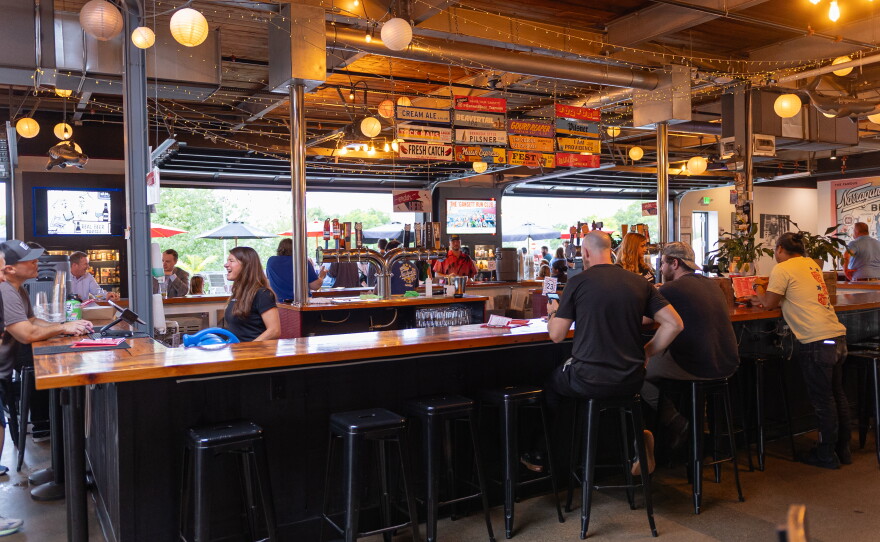
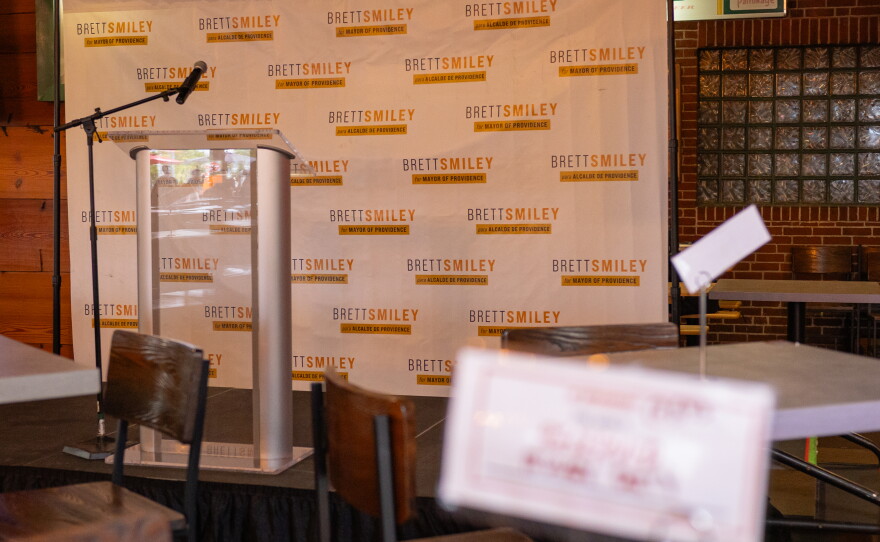
Smiley campaign to gather at Narragansett Brewery in Fox Point
Mayor Brett Smiley is expected to arrive at his election night party at Fox Point’s Narragansett Brewery after polls close at 8 p.m. Just before 7 p.m., the section of the bar reserved for Smiley supporters was mostly empty, except for a few early arrivals and many journalists setting up.

Providence: Teacher union president backs Morales in mayoral primary
Lindsay Paiva is a teacher at Webster Avenue Elementary School in Providence and the president of the Providence Teachers Union.
Paiva said her choice for mayor was simple: Providence Mayor Brett Smiley told the union he supports expanding charter schools in Providence, she said, while challenger Rep. David Morales recently voted to place a temporary moratorium on charter school expansion in Rhode Island.
“I think David really had a sense of what the needs are on the ground, because he talks to a lot of teachers,” Paiva said. “The main thing that we consistently brought up, and that he put in his educational platform — which he also had us consult on and co-create — was around safe staffing and increasing social and emotional supports for students.”
Foulkes campaign to gather at Track 15 in Providence
A light rain is keeping activity minimal as Helena Foulkes’s campaign prepares for their primary watch event outside Track 15 in Providence. Supporters have high hopes, considering Foulkes has generally maintained a double-digit lead in polls for months. The rain is expected to fade as voting draws to a close at 8 p.m. on Wednesday.
The fate of Foulkes’s effort to unseat an incumbent governor in a primary for the first time in 32 years will be revealed exactly one year after she announced her campaign.

Across the Ocean State, voter turnout keeps rolling in
Voting in a non-presidential year? Rhode Islanders still dig it.
Two hours before polls closed on Wednesday, the number of votes cast this year surpassed the total number of votes cast in 2022.
More than 139,000 people had cast ballots – more than 17% turnout – as of 6 p.m, according to the Rhode Island Department of State's online turnout tracker.
Providence: Some late openings at polling locations
A number of polling locations in Providence didn’t open on time this morning, apparently because a large number of poll workers didn’t show up for their shifts.
“We haven’t been sent any reminder or follow-up communications from the board of canvassers,” said Alana Deluty, a poll worker in the Hartford neighborhood. “I got an email on Aug. 6 with my polling location assignment, but I haven’t gotten any communication since then aside from the training that I went to.”
Deluty said the unusual Wednesday election date may also have thrown people off — and that it would have helped if poll workers had received a reminder the day before the election.

Providence: Evening voters arrive at the polls
Providence voter Lateef Animashaun has been a bridge engineer at the Rhode Island Department of Transportation for over 20 years. He cast his ballot on Wednesday at the Pleasant View School in the Manton neighborhood at the end of his workday. Animashaun didn’t share who he voted for in the governor’s race, but he did say too many people are looking for a scapegoat to blame for the Washington Bridge. He said he feels the transportation crisis is too complex to pin on one person.
In the Providence mayoral race, Animashaun said he's sticking with incumbent Brett Smiley.
“I don't expect him to do everything, but so far, he kept the city safe and property taxes is normal,” said Animashaun. “He did his best, and he has many good people.”
Westerly: Voter says Newport-style short-term rental rules don’t fit her town
Westerly voter Mary Catherine Muli said she’s tired of cronyism and, for that reason, she was happy to cast her vote in the Democratic primary for Helena Foulkes.
“I think she’s a very good choice for governor, and I think she could do a lot of good for the state of Rhode Island,” Muli said.
Locally, Muli said she also has strong concerns about town council elections. Westerly has been actively debating restrictions on short-term rentals (STRs) to protect housing inventory.
“They’re considering to adopt Newport’s rules and regulations, and Newport is totally different,” she said. “You can’t just carbon copy it.”
Newport-style restrictions, which distinguish between “hosted” and “unhosted” rentals in the heavily touristed area, require short-term rentals away from the coastline to be owner-occupied.
Muli is retired. She’d like to spend more time in Connecticut with her children and grandchildren. Renting out her home through services such as AirBnB would help pay her property tax and utility bills. Without that income, she says it would be hard to keep her house.
“I’d like to retain (the property) because I’d like to use it from time to time,” said Muli. “But I’d also like to have a way to be able to pay for it.”

Providence: Housing affordability top of mind for Fox Point voters
In Fox Point, a neighborhood at the edge of College Hill, rent and housing costs were top of mind for many voters on Wednesday.
“The most important thing is affordability. Just making sure that working class people can afford to live in Providence as housing and all sorts of other prices go up,” said voter Ian Anstee, a Ph.D. student at Brown University, on his way out of the neighborhood’s polling station.
Both Ward 1 city council candidates, incumbent John Goncalves and challenger Miguel Martínez Youngs, include housing affordability in their platforms. But their positions differ in a key area: rent control. Last April, Goncalves voted against a rent stabilization measure that would have limited annual rent increases in the city to 4%. His challenger, Youngs, is in favor of rent stabilization.

Westerly: A steady stream of afternoon voters heads to the polls
At Westerly Middle School on Wednesday afternoon, there’s been a steady stream of voters. It’s busy, but no lines.
Voter Sue Gallagher said she’s hoping for a blue wave in November. In this Ocean State primary, the governor’s race was the big draw for her. She cast a vote for McKee.
“I feel like he’s made good decisions. I feel he’s honest, above all,” Gallagher said.
When it comes to challenger Helena Foulkes, prior affiliations with CVS made her feel too corporate for Gallagher.
“We have to get our health care in order, and I feel like Dan McKee is trying to bring health care providers to the state and pay them what they need to make to continue,” explained Gallagher. “And I don’t feel like Helena Foulkes understands the middle class.”

Providence: “We believe in the integrity of this process”
Robin Vande Werken is the moderator overseeing two polling precincts on Providence’s East Side. She said she has seen a steady flow of voters on Wednesday. As of 2 p.m., about 500 people had voted at her polling location, the Jewish Alliance of Greater Rhode Island.
“It's such an interesting position to hold for a day,” Vande Werken said of her work at the polls. “I feel like I learned so much, and it's just a small way that I can contribute to shoring up this process that's integral to our country.”
When asked if she’s felt more scrutiny given the spotlight that election officials have been put under nationwide since President Donald Trump’s first run in office, Vande Werken said she hasn't felt any pressure.
“I would say generally, though, that election officials welcome the scrutiny because we believe in the integrity of this process,” Vande Werken said. “So (anyone) is welcome to take a closer look, to count, to observe, to watch. All of those things are very, very welcome and important parts of this process.”

East Providence: Hear from Ward 1 Councilor Frank Rego
East Providence Ward 1 Councilor Frank Rego, who faces three opponents on the ballot, stopped by the Myron J. Francis Elementary School in Rumford on Wednesday. When asked about top concerns for voters, Rego listed: “price of gasoline, health care, housing.”
He stressed the importance of change at the local level, narrowing in on housing.
“In East Providence, I just passed legislation for ADUs [accessory dwelling units],” Rego said. “It will be more advantageous to get people to expand their house for either an elderly parent or a child who just graduated.”
East Providence: Hear from State Rep. Joe Solomon Jr., Democratic candidate for attorney general
State Rep. Joe Solomon Jr. of Warwick, one of four Democrats running for attorney general, stopped to greet voters at the Myron J. Francis Elementary School in Rumford.
“I think Rhode Islanders are really paying attention to this race,” Solomon said.
“It’s so important, because so many people don’t realize that this seat is for the chief law enforcement officer position in the state of Rhode Island, and it has such a huge effect on criminal law as well as health care.”
Pawtucket: The couple that votes together…
Leonel Fortes and his wife Elisabeth voted early Wednesday at Francis J. Varieur Elementary School in Pawtucket. Leonel said his wife is a new citizen and it is her first time voting.
“I became a citizen three years ago, so since then, I've been voting every time I can — every opportunity,” said Fortes, who is originally from Portugal and moved to the United States in 2013.
“I’m American, so this is my duty to go out and vote.”

Pawtucket: “We have some really strong challengers in big races”
Jessica Tabak, voting at Francis J. Varieur Elementary School in Pawtucket, said there seems to be a lot of enthusiasm among voters because there are several competitive races on the ballot.
“I think a lot of people are turning out for this primary because we have some really strong challengers in big races. And, you know, it's Rhode Island, so the primary often plays out, right?” said Tabak.
“You know, there are some races where there haven't been viable challenger candidates in primaries for a long time. And I think people are excited either to reaffirm their support for somebody, or to go in what feels like a viable new direction,” she concluded.

Procrastinators? Not in Rhode Island!
More than 37,000 people voted early in the state primary, according to the Rhode Island Department of State's online turnout tracker. That's more than double the number of people who voted early in 2022.
Some 61,488 had voted in the 2026 primary as of 9 a.m. on Wednesday, Sept. 9, according to turnout figures. That equates to 7.8% of registered voters.
Total turnout reached 44.4% of registered voters in 2022.

Pawtucket: Morning voters arrive to cast their ballots
Cameron Segalla, 27, came to a polling place in Pawtucket early Wednesday, Sept. 9 to hold a sign for Adam Greenman, who is challenging long-time mayor Donald Grebien.
Segalla, who ran for Pawtucket mayor himself in 2024, said turnout in early voting already indicates a lot of enthusiasm among Pawtucket voters.
He said about 1,600 people voted by early voting, and another 800 sent mail-in ballots.
“The early voting numbers alone are four times as many early voters as in 2024, and three times as many as in 2022, which was the last gubernatorial election,” Segalla said. “So if you're gonna gauge it by that, this is a very, very high turnout. It's impressive.”
But in-person voting at the Mathieu Senior Center started slowly early Wednesday, with no foot traffic when the polls opened.
