

From the outside, the green home on a bustling Fall River street looks completely charming and unassuming – a vibrant, well-manicured lawn, an old-timey lamppost and a cartoonish gate adorned with a “B” give the illusion that the house is nothing more than a vintage inn. If not for the sign boasting “Top 10 haunted places in America,” or the hatchet beneath the words “Bed and breakfast,” you might have no idea that 230 Second St. was actually the scene of two of the most infamous crimes in the last 134 years.
My colleague Allison Magnus and I decided to pay a visit to the Lizzie Borden House to get to the bottom of some popular rumors and misconceptions surrounding the 1892 murders — and to see if the house is as haunted as everyone says it is.
The legends
You may have heard the rhyme as a ghost story around the campfire: “Lizzie Borden took an ax, gave her mother 40 whacks, when she saw what she had done, she gave her father 41.” But like the modest look of the home in which the real story took place, not everything is as it seems.
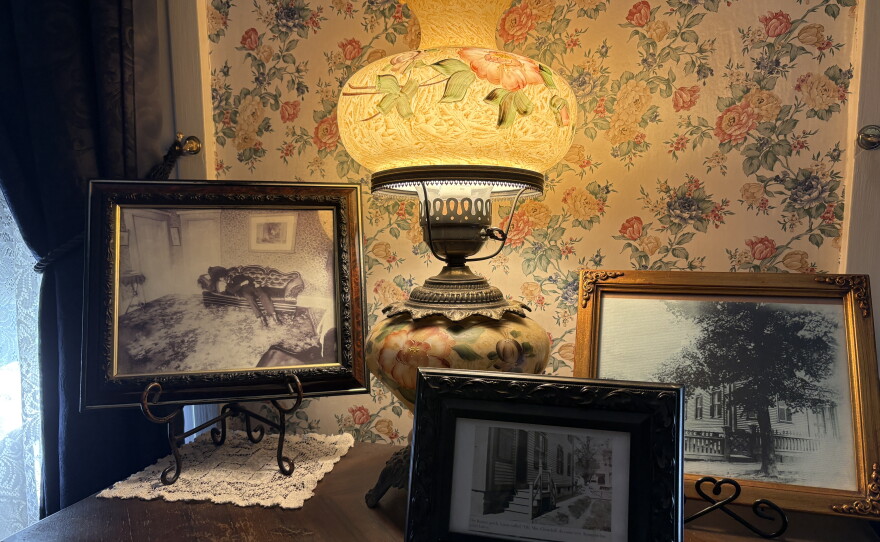
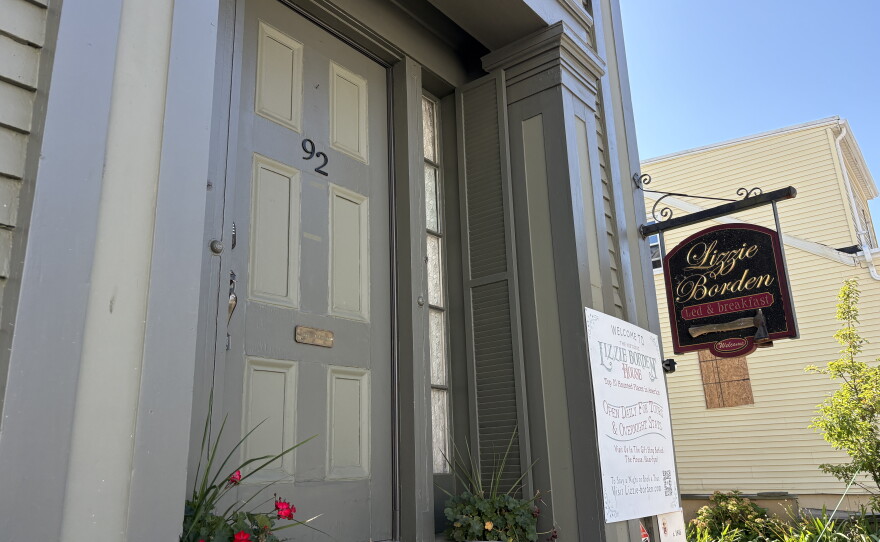
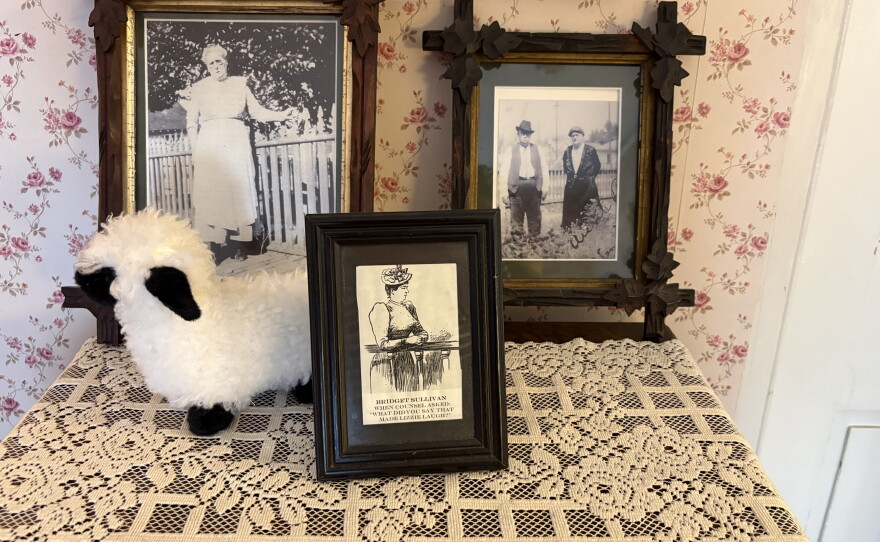
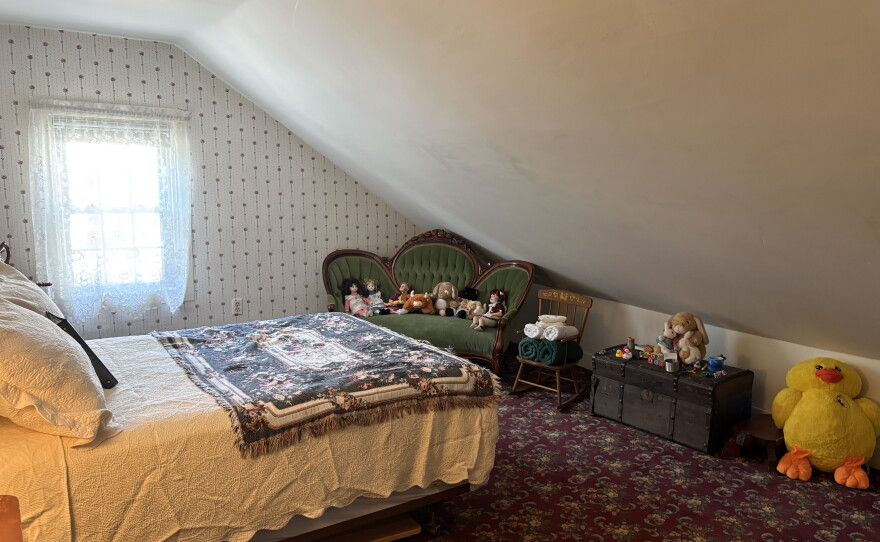
Popular legend depicts Lizzie Borden as a spoiled brat who, with help from housekeeper Bridget, plotted to kill her father Andrew and her nasty, gold-digging stepmother Abby (Durgee Gray) Borden to access their enormous fortune. As the story goes, Borden initially planned on poisoning them, but after failing to acquire a deadly acid, she turned to a more brutal murder weapon: an ax. Lizzie allegedly brutally murdered her parents and hid the ax. Though she was seen as the main suspect, she was eventually acquitted for lack of evidence, allowing her to spend the rest of her life as a wealthy, yet despised, woman.
Larry LoVerde, a tour guide at the Lizzie Borden House, said most of the legendary details aren’t exactly right. The real story, LoVerde said, is much more complex.
The basis of the story is true, said LoVerde: Lizzie Borden’s parents were violently murdered with a hatchet in their home on August 4, 1892. Andrew and Abby were extremely wealthy. Lizzie wanted to inherit her father’s fortune and tensions in the Borden household were running high — allegedly because Andrew refused to fund the lavish lifestyles of Lizzie and her sister, Emma, yet generously provided for Abby’s family.
Several details do make Lizzie appear guilty, LoVerde noted: She was home during the murders and claimed to hear nothing; she had motive; upon discovering the bodies, she ran to a friend instead of a doctor; she attempted to buy acid one evening before the killings; she possessed bloody rags (claiming menstrual use); she was seen burning a dress days after the murders; and she remained eerily calm during the investigation and trial (though that could be attributed to a heavy dose of morphine prescribed by a doctor for Lizzie’s grief).
The theories
LoVerde said that he doesn’t believe Lizzie did it. At least, not by herself.
“Too many things would’ve had to go perfectly right for one person to pull this off and also not look like a bloodstained, sweaty mess,” LoVerde said. “That kind of mayhem, twice in an hour and a half — I just think there’s got to be other people involved.”
A popular theory is that Lizzie’s maternal uncle, who coincidentally stayed over the evening before the murders, assisted his niece. Another is that the housekeeper, Bridget, tired of her bosses, took out Andrew and Abby herself. But LoVerde said he’s skeptical.
An interesting though unusual theory, LoVerde said, is that members of a Chinese gang killed Andrew and Abby as a favor to Lizzie.
LoVerde explained that Lizzie, despite her now notorious reputation, was actually known for her kindness, generosity and deep love of animals, both before and after the murders. She taught Sunday school in immigrant communities and used her knack for languages to learn Mandarin and teach English to Chinese immigrants. Some of those immigrants allegedly belonged to Chinese Tong gangs, whose signature weapon was… a hatchet.
“It holds as much water as anything else does, but I share that just to emphasize that this case is really all over the place, even 134 years later,” LoVerde said.
One detail that LoVerde said should be debunked is Abby's frequent portrayal as a greedy, evil stepmother. First-hand accounts describe Abby as quiet, generally kind and dutiful. LoVerde added that he believes Abby was more of a causality – Abby was killed first, and had to be killed first, in order for Lizzie and Emma to inherit Andrew’s fortune. Otherwise, Abby would’ve been the recipient, and then, upon her death, her next of kin would’ve been entitled to the inheritance — not the Borden girls.
The hauntings
As for the house's reputation as a haunted landmark, LoVerde claims that’s less of a mystery. The bed and breakfast caters to a horror-loving crowd, however LoVerde did report experiencing numerous paranormal encounters during his year as a daytime tour guide. He also noted that nighttime guides claim to have been confronted with even scarier events, including inexplicable scratches covering their bodies after tours and an infrared image resembling a toddler in a diaper in a room referred to as “the children’s room.”
The bedroom Abby was murdered in is by far the most popular choice for overnight guests, LoVerde said, but he contests that the most haunted rooms are by far the basement and the children’s room.
“It’s not uncommon for people staying in that room to pack up and leave in the middle of the night,” he said.
This writer – a person who wholeheartedly believes in ghosts – experienced goosebumps and chills up my spine in the dining room, the children’s room and the bedroom of housemaid Bridget while visiting the Lizzie Borden House. No apparitions were seen first hand, and it was hard to tell if I was hearing the sounds of the supernatural or simply fellow guests and employees throughout. I like to think it was the former. Even still, I’m not sure I’d have the courage to return after sundown.


